If you’re considering canyoning in Bali for the first time, one question usually comes up immediately: is canyoning safe in Bali?
The short answer is yes, when it is organized professionally. Canyoning safety in Bali is often one of the main concerns for travelers trying this activity for the first time.
With trained guides, proper technical equipment, and carefully selected canyon routes, canyoning in Bali is a structured outdoor activity designed to manage risk in a controlled environment.
What makes canyoning in Bali safe?
Canyoning follows a clear safety system. It is not an unregulated extreme activity. When these elements are in place, canyoning becomes a guided and organized outdoor experience:
- Trained and experienced canyoning guides
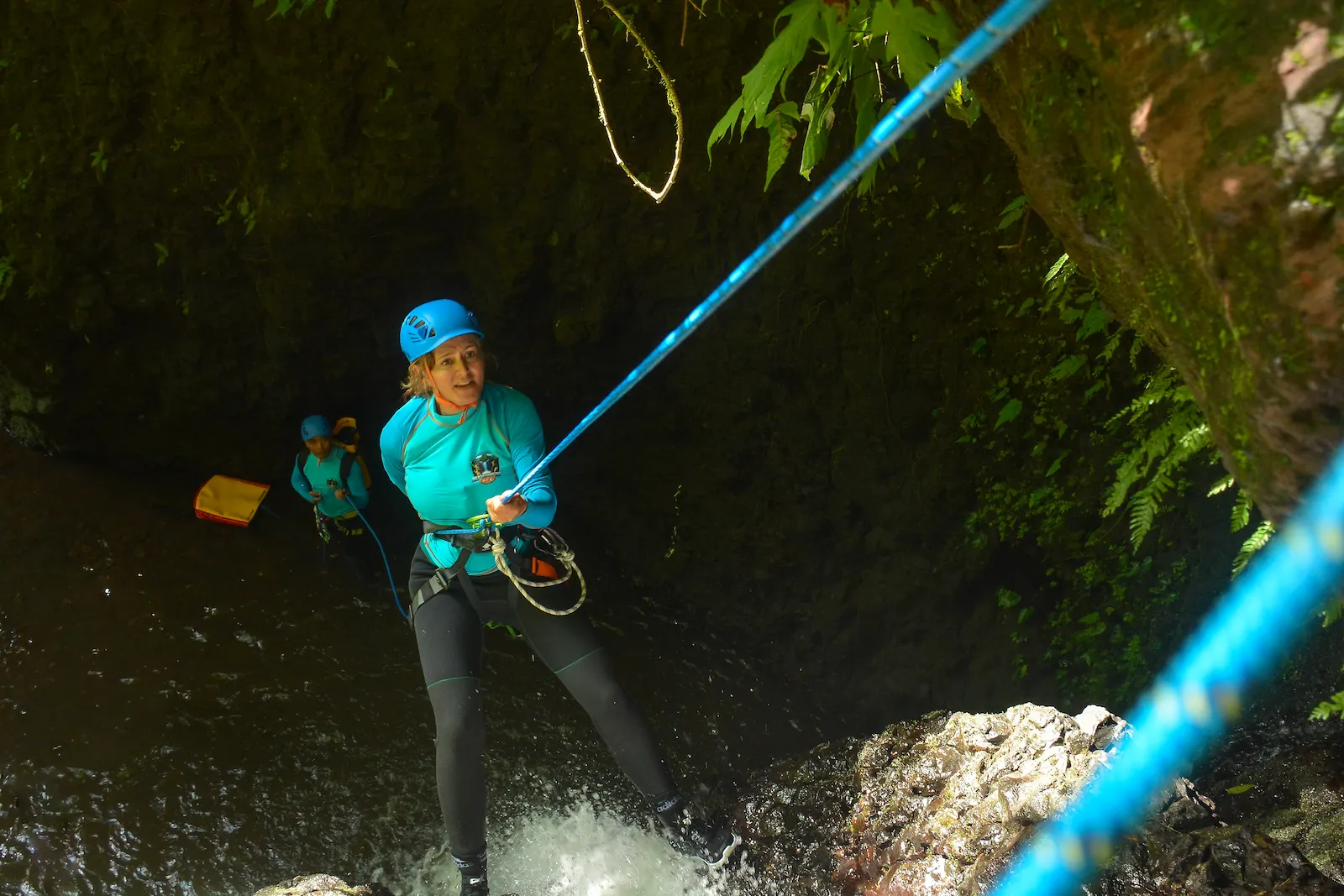
- Canyoning equipment such as helmet, harness, wetsuit and canyoning shoes
- A safety briefing before entering the canyon
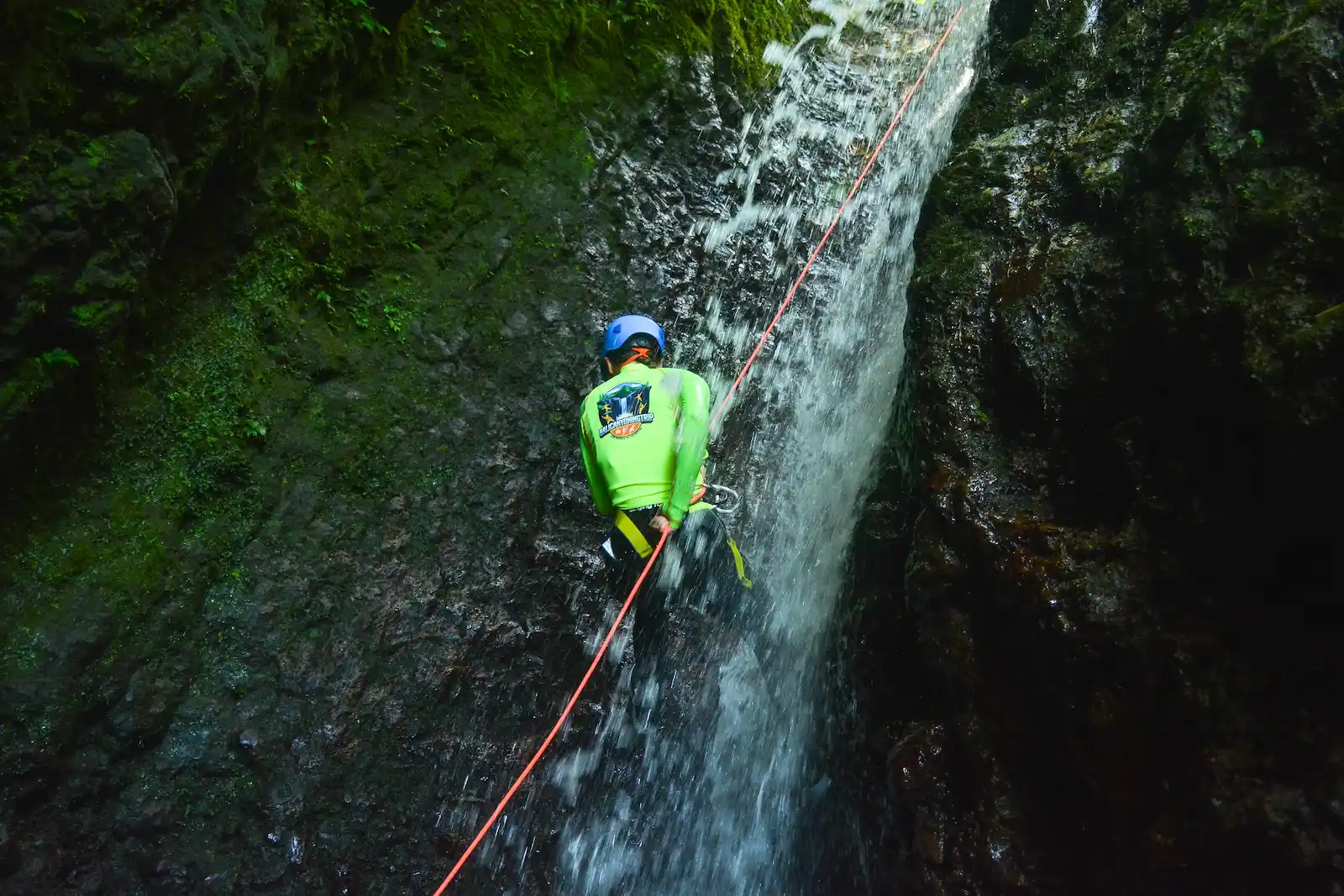
- Rope systems during rappels
- Continuous supervision throughout the activity
- Weather and water level assessment before departure
Do you need experience to go canyoning?
No prior experience is required for beginner-level canyoning routes. Many participants trying canyoning in Bali are first-time adventurers. Entry-level canyons are designed to introduce basic techniques gradually and safely.
Beginner routes typically include:
- Smaller rappels with safe descents
- Clear landing zones
- Optional jumps
- Short swimming sections
- Fun progression through the canyon
Before entering the canyon, guides explain every movement step by step. This includes how to walk on wet or slippery rock, how to position your body during rappels, and how to communicate during the activity.
Good to know: the goal is not speed or performance. It is controlled movement and understanding the environment — so you finish the canyon feeling confident, not rushed.
Are the jumps mandatory?
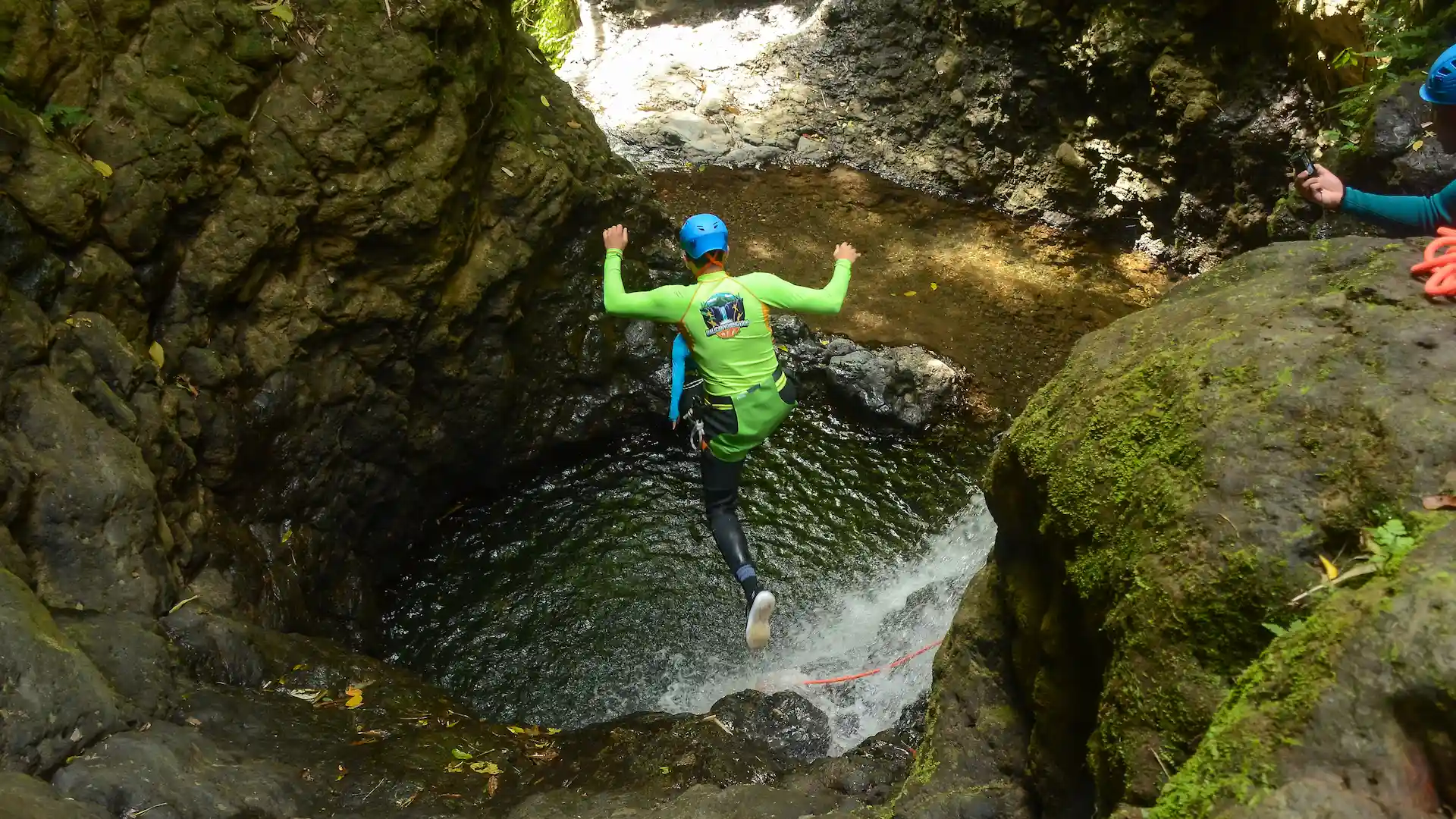
It depends on the route. On our Gitgit routes (Easy Flow, Splash and Brave Trail), every jump is optional. Natural pools allow for small cliff jumps, but no participant is required to jump.
If you prefer not to jump on these routes, guides provide an alternative descent using a rope system or slides. This ensures that each obstacle can be completed in a controlled way.
The advanced routes at Sambangan are different. On Asri Challenge, you can’t skip some of the jumps, and on Aling Venture all jumps are required. If you don’t want to jump, choose a Gitgit route. You can compare all six routes in our guide to canyoning in Bali.
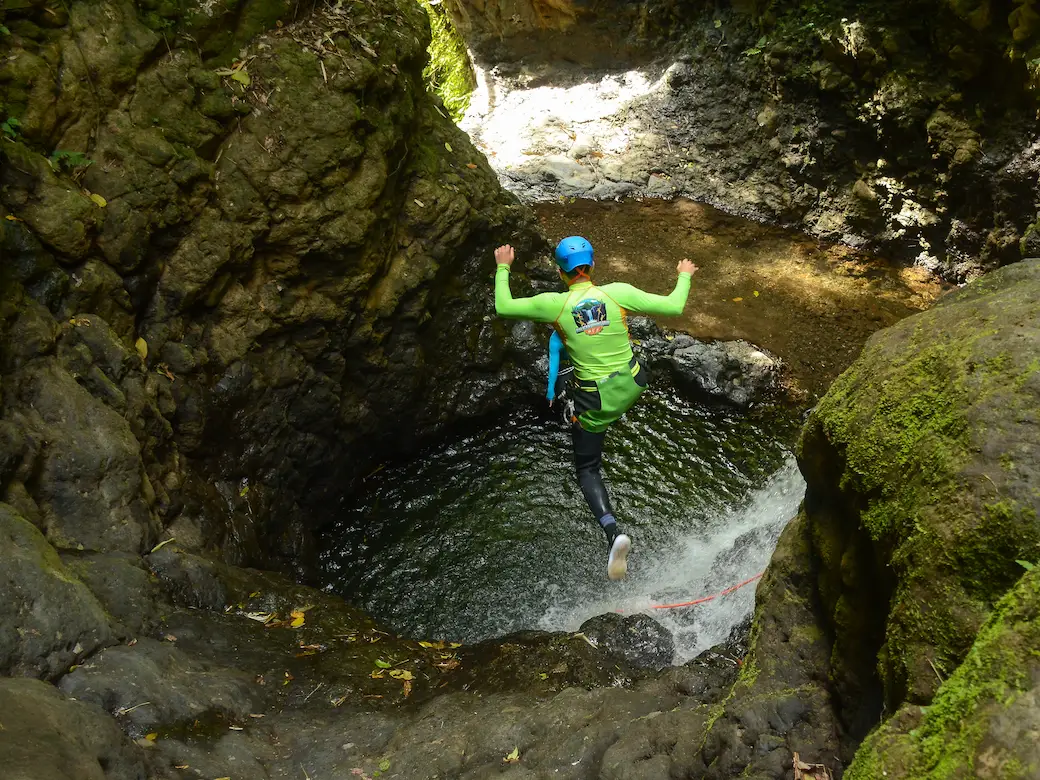
This flexibility is an important part of Bali canyoning safety. Beginner routes are designed to adapt to different comfort levels, not to pressure participants into doing something they are unsure about. Fun, comfort and communication are prioritized throughout the experience.
Is canyoning safe in Bali for beginners?
Yes — even for teenagers. Beginner-friendly canyoning in Bali is designed for individuals with no prior experience. The routes focus on controlled descents, shorter heights and fun progression through the canyon.
It is suitable for:
- First-time adventurers
- Couples
- Families
- Travelers with moderate fitness
You do not need technical climbing skills. A basic level of physical fitness and comfort in natural environments is enough. The most important factor is matching the canyon difficulty with your experience level and confidence. You can review the available options on our canyoning trips page to understand the differences between levels.
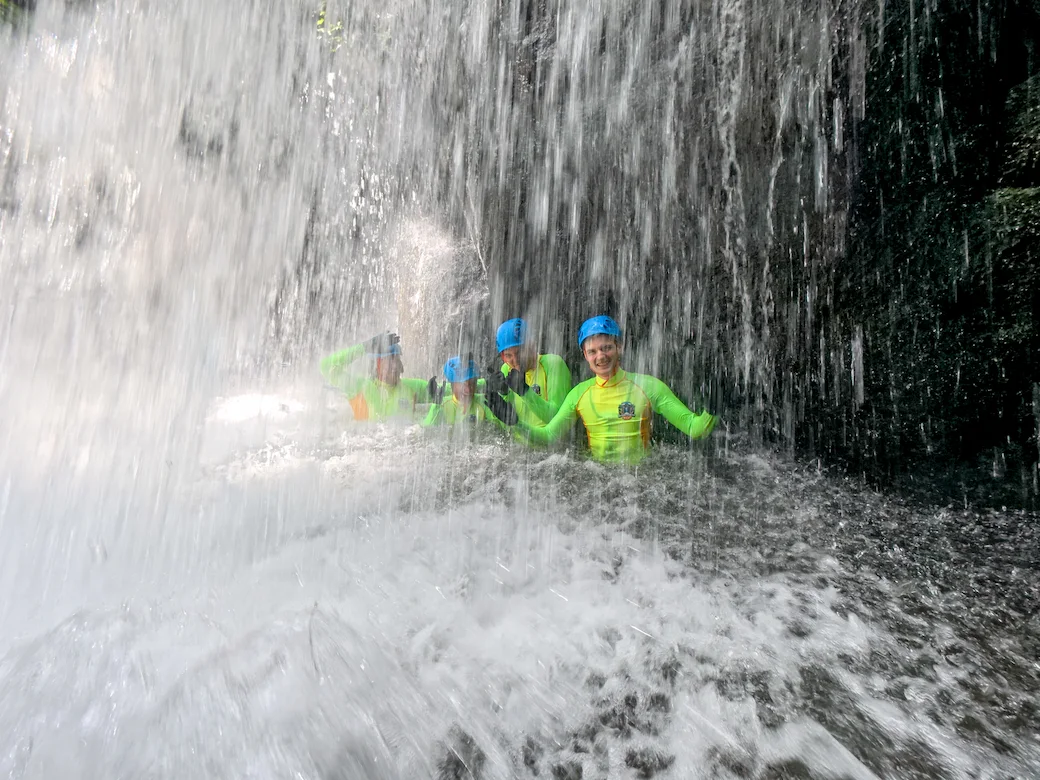
When is canyoning not recommended?
While canyoning in Bali is suitable for most healthy travelers, there are situations where participation may not be recommended. The activity involves walking on uneven terrain, short swims and rope descents, so a reasonable level of mobility and balance is required.
Please check with a doctor first if you have a serious heart condition, severe mobility limitations, a recent major injury, a strong fear of heights, or a medical condition that restricts outdoor activity.
If you have any medical concerns, consulting a doctor before booking an outdoor adventure activity is always recommended.
Why Bali is considered a safe destination for canyoning
Bali has established canyon routes that are regularly used and maintained by professional teams. This creates a more structured environment compared to destinations where canyoning is less developed. Several factors contribute to Bali canyoning safety:
- Clearly defined entry and exit points
- Routes selected according to seasonal water conditions
- Local guides who understand terrain and flow variations
- Year-round canyon access with monitored conditions
Because the activity has been developed over time in specific areas of North Bali, operators are familiar with the characteristics of each canyon. This familiarity reduces uncertainty and allows trips to be planned with fun and safety control.
Less about risk, more about exploring Bali
For most healthy and reasonably active travelers, canyoning in Bali is a structured and well-managed outdoor activity.
Understanding how safety systems work often reduces initial concerns. With the right route selection and professional guidance, the experience becomes less about risk and more about exploring Bali’s natural landscape in a fun and adventurous environment.